-
Richard Munyaka
-
With Richard, his wife and his mother
-
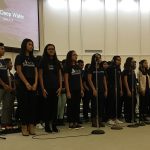
Kids dance their "memory verse" at the Gospel Impact Centre
When he thanks a foreigner, Richard says, "Thank you very much!" When he speaks to another Kenyan, he says, "Asante sana!" When he speaks to a fellow Maasai, he says, "Ashi naling!"
And when he speaks to one of the leaders of Berean Safari 2010, he says, "I can use this teaching now!"
As I listened to Richard say these words, I knew they reflected something more than the gratitude and excitement of the moment. Richard was expressing more than a wish or vague hope. He was reporting a fact. I know he will make use of what he learned at Berean Safari 2010 because Richard has already been busy using what he learned in 2008 and 2009.
Richard Munyaka is a leader among the Maasai people. He has paid his dues to cattle herding and, as an important part of that, fending off lions. If I had to keep a hungry lion away from the cattle with nothing more than a seven foot wooden spear, I would definitely want to be standing next to Richard!
At this point in his life, though, Richard spends little time with cattle. He spends far more time leading people. He is the pastor of the Gospel Impact Centre, a young and growing congregation in Kajiado, Kenya. He is also a dynamic force among a much larger group of churches and pastors. Richard plays a key role in the work of a Kenyan organization called Daraja La Tumaini, or Bridge of Hope, a group dedicated to helping people transform their lives both spiritually and materially. (Daraja La Tumaini is inspired by the way God used Hans Nielsen Hauge to transform Norway in the 19th century.)
Richard says many Maasai churches are led by people who have faithfully responded to God's call to ministry, but have never had the opportunity to go to seminary or Bible school: "We have many pastors with no training. They are trying to serve and very much need this kind of training." Seeing that need, and grateful for the Bible study training at Berean Safari that has helped him so much, personally, Richard has dedicated himself to passing it along to other Maasai leaders.
As I had lunch with Richard in his home in Kajiado this month, he mentioned something else. Each year, Berean Safari brings together people from ten or more countries throughout and beyond Africa. The rich cultural mix is an important part of the experience for all of us. This year, Richard was in the group that studied the opening chapters of Genesis, co-led by my friends David Muturi (Kenya) and Ron Kernaghan (U.S.). Scripture came together with the diversity of the group to open up many interesting conversations about gospel and culture. Richard is eager to take these conversations right into the practice of ministry in Kajiado. For, even though the settlement is over an hour south of Nairobi, well beyond the urban advance of Kenya's sprawling capital, it is a place where cultural diversity is growing rapidly: "We have more than 42 tribes in Kenya. In this new town, many different tribes are coming together and I am seeing how I can come together with different cultures now. I can use this teaching now!"
From a gospel perspective, the best way to say "thank you," is to take what we have received and put it at the service of others. So, I am delighted to see Richard using what he has received to serve those around him. I try to live out the same principle in my own life. And I pray that you may have the joy of doing the same--whatever the gifts, talents, opportunities or advantages you have received.
As summer turns to fall in the U.S. (it is winter-to-spring time in Kenya!), we are entering the time when people in the American Baptist tradition renew our commitment to support the global mission of Jesus Christ financially. I am grateful for your support of the little piece of that global work that God accomplishes through this ministry. I and my Mission Partnership Team are eager to expand our network of people who pray and give to make this specific ministry possible (invite your friends to join with us! invite your church!).
At the same time, we are deeply grateful for every gift that is given generally to the World Mission Offering. The staff of International Ministries is graciously allowing many of us missionaries to continue to serve around the world, even while we gradually move toward the full support of our ministries. They are able to grant us that freedom because people give to the World Mission Offering. Giving to the World Mission Offering, then, continues to be vitally important for all the missionaries of International Ministries and for all those who--as God works through us--come to Christ, grow in Christ and change the world with Christ.
Thank you for your encouragement, your prayers and your gifts, all of which God uses to make this ministry possible!
Blessings,
Stan
Stan
And when he speaks to one of the leaders of Berean Safari 2010, he says, "I can use this teaching now!"
As I listened to Richard say these words, I knew they reflected something more than the gratitude and excitement of the moment. Richard was expressing more than a wish or vague hope. He was reporting a fact. I know he will make use of what he learned at Berean Safari 2010 because Richard has already been busy using what he learned in 2008 and 2009.
Richard Munyaka is a leader among the Maasai people. He has paid his dues to cattle herding and, as an important part of that, fending off lions. If I had to keep a hungry lion away from the cattle with nothing more than a seven foot wooden spear, I would definitely want to be standing next to Richard!
At this point in his life, though, Richard spends little time with cattle. He spends far more time leading people. He is the pastor of the Gospel Impact Centre, a young and growing congregation in Kajiado, Kenya. He is also a dynamic force among a much larger group of churches and pastors. Richard plays a key role in the work of a Kenyan organization called Daraja La Tumaini, or Bridge of Hope, a group dedicated to helping people transform their lives both spiritually and materially. (Daraja La Tumaini is inspired by the way God used Hans Nielsen Hauge to transform Norway in the 19th century.)
Richard says many Maasai churches are led by people who have faithfully responded to God's call to ministry, but have never had the opportunity to go to seminary or Bible school: "We have many pastors with no training. They are trying to serve and very much need this kind of training." Seeing that need, and grateful for the Bible study training at Berean Safari that has helped him so much, personally, Richard has dedicated himself to passing it along to other Maasai leaders.
As I had lunch with Richard in his home in Kajiado this month, he mentioned something else. Each year, Berean Safari brings together people from ten or more countries throughout and beyond Africa. The rich cultural mix is an important part of the experience for all of us. This year, Richard was in the group that studied the opening chapters of Genesis, co-led by my friends David Muturi (Kenya) and Ron Kernaghan (U.S.). Scripture came together with the diversity of the group to open up many interesting conversations about gospel and culture. Richard is eager to take these conversations right into the practice of ministry in Kajiado. For, even though the settlement is over an hour south of Nairobi, well beyond the urban advance of Kenya's sprawling capital, it is a place where cultural diversity is growing rapidly: "We have more than 42 tribes in Kenya. In this new town, many different tribes are coming together and I am seeing how I can come together with different cultures now. I can use this teaching now!"
From a gospel perspective, the best way to say "thank you," is to take what we have received and put it at the service of others. So, I am delighted to see Richard using what he has received to serve those around him. I try to live out the same principle in my own life. And I pray that you may have the joy of doing the same--whatever the gifts, talents, opportunities or advantages you have received.
As summer turns to fall in the U.S. (it is winter-to-spring time in Kenya!), we are entering the time when people in the American Baptist tradition renew our commitment to support the global mission of Jesus Christ financially. I am grateful for your support of the little piece of that global work that God accomplishes through this ministry. I and my Mission Partnership Team are eager to expand our network of people who pray and give to make this specific ministry possible (invite your friends to join with us! invite your church!).
At the same time, we are deeply grateful for every gift that is given generally to the World Mission Offering. The staff of International Ministries is graciously allowing many of us missionaries to continue to serve around the world, even while we gradually move toward the full support of our ministries. They are able to grant us that freedom because people give to the World Mission Offering. Giving to the World Mission Offering, then, continues to be vitally important for all the missionaries of International Ministries and for all those who--as God works through us--come to Christ, grow in Christ and change the world with Christ.
Thank you for your encouragement, your prayers and your gifts, all of which God uses to make this ministry possible!
Blessings,
Stan
Stan